Australia Day
January 26th is celebrated throughout Australia as our National Day. It was on this day in 1788 that this new country was founded by the first European settlers to arrive here. I thought I’d share a few images of things that are quintessentially Australian as my way of celebrating Australia day, and sharing something of our country with others.

Western Grey Kangaroo
Australia is known for its wonderful wildlife. The kangaroo would have to be one of the most recognisable members of our fauna. The cuddly look of the Koala would also be recognised world wide.
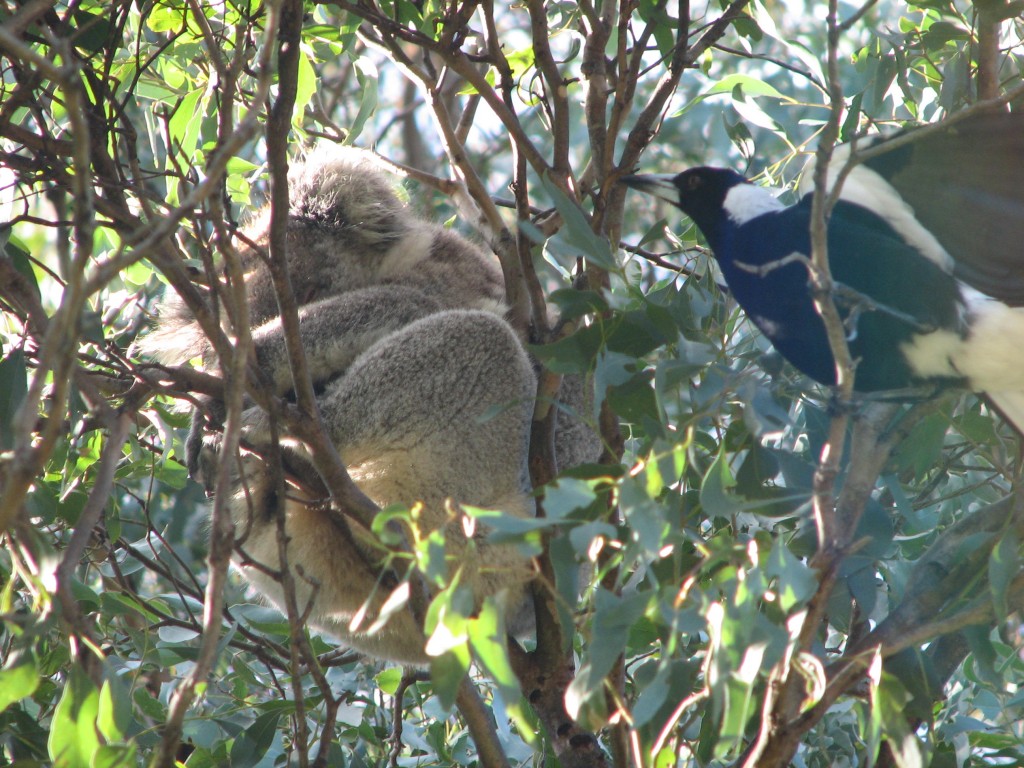
Koala and Magpie
Australia is also known for its amazing array of plants and wildflowers. Probably the most easily recognised tree would be the eucalypt (or gum) tree. There are hundreds of different species; I will show only one here. This scene, taken in the mid north farming area of South Australia, is typical of many parts of our land.
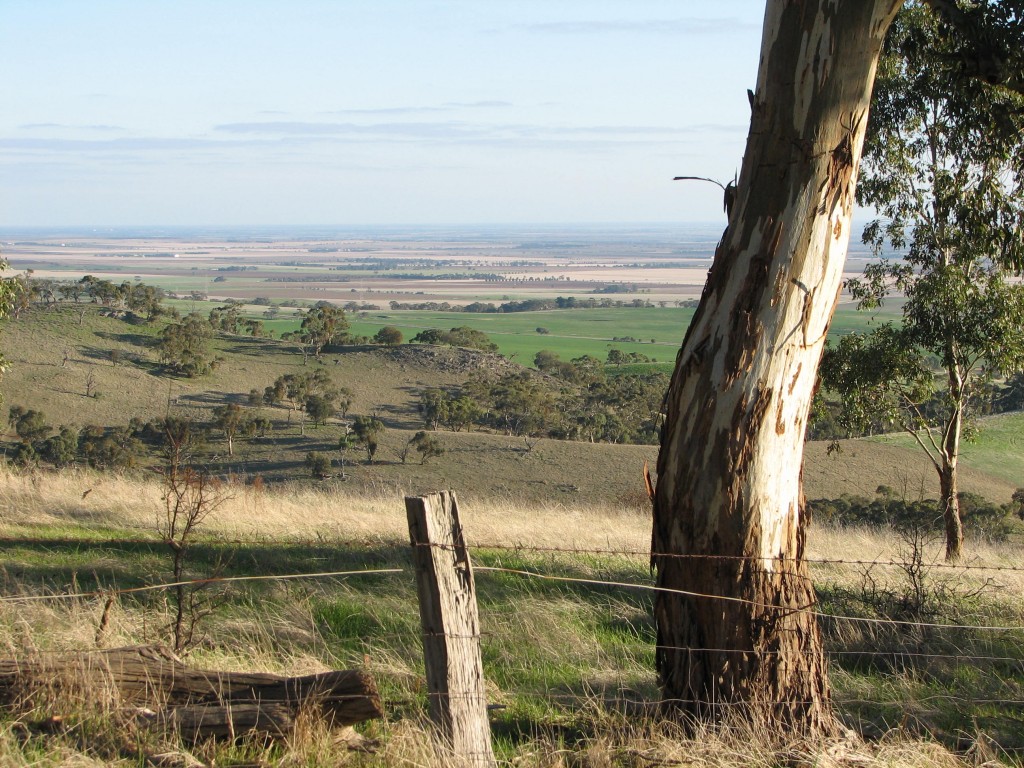
Balaklava Plains near Blyth South Australia
Of our stunning array of wildflowers, the banksia is easily recognised by many Australians. These magnificent plants give an amazing display when in full flower. The birds go crazy feeding on the nectar and seeds they produce. Photographers, artists and gardeners go equally crazy over them
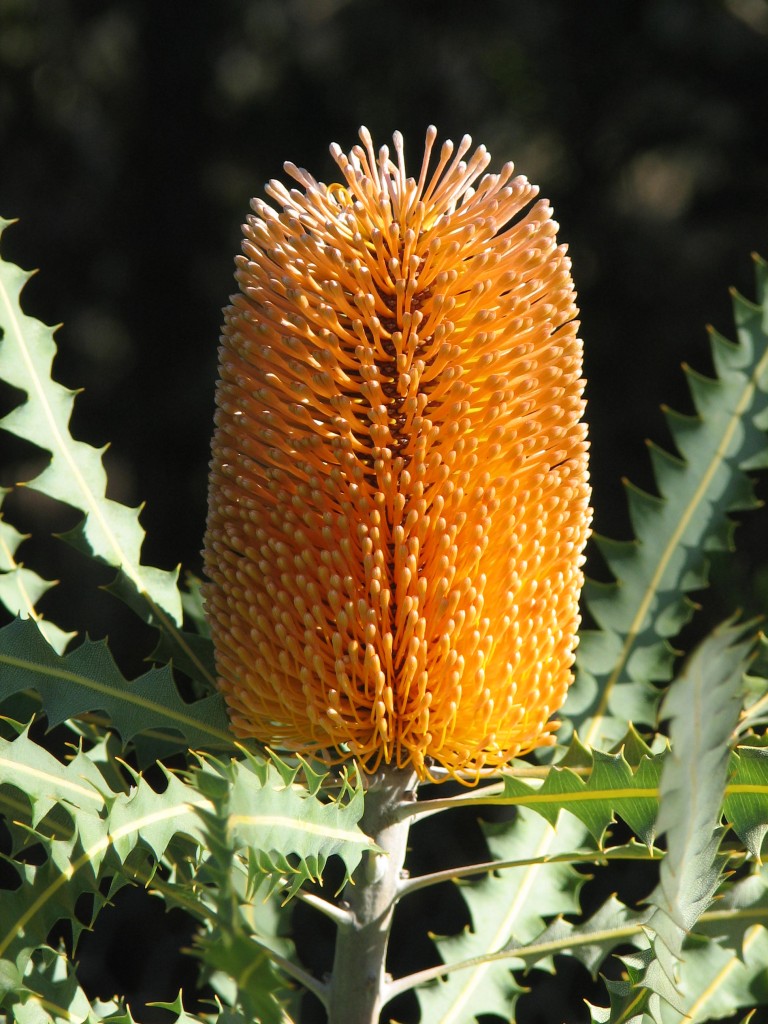
Banksia flower
Now we turn to the birds. With about 800 species Australia is a plentiful land for the bird lover. Our vast range of parrots and honeyeaters, blue wrens and emus, waterfowl, waders, bush birds and sea birds attract birders from the world over. I’ve just chosen several to feature here.

Mallee Ringneck Parrot
Australia has so many beautiful birds it is hard just to show only two. Many more are featured in my photo gallery here.
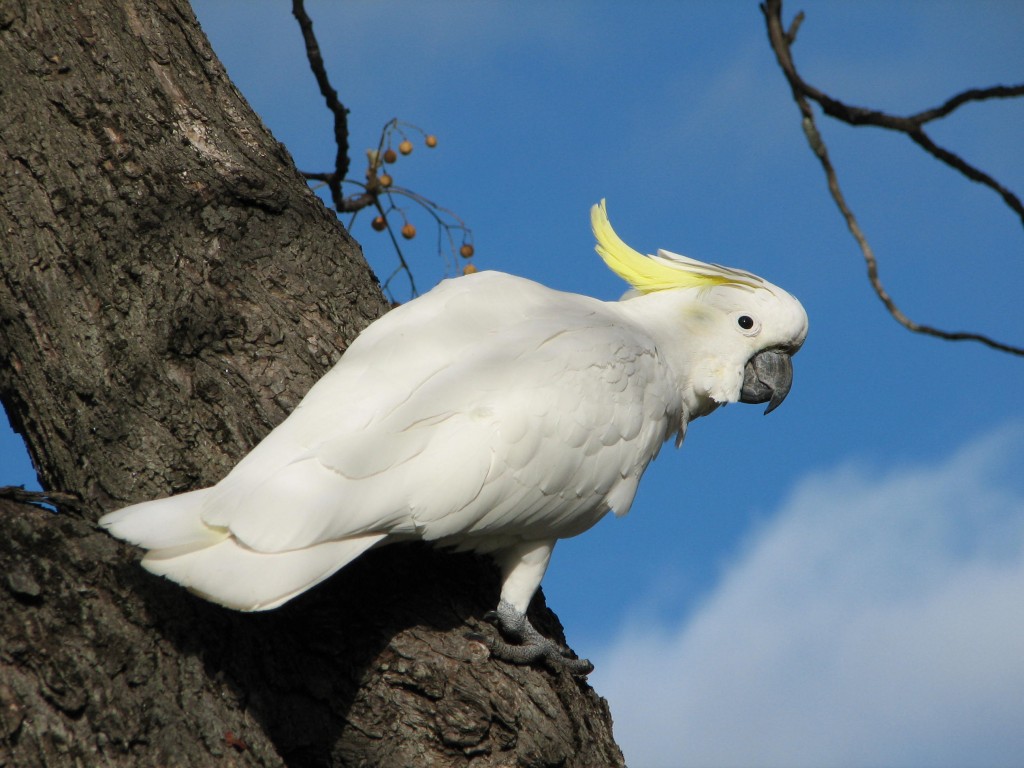
Sulphur Crested Cockatoo

Sydney Opera House
Idiom #11: A lame duck
1 Comment »8th January, 2007; Category: Idioms
This week’s idiom:
“A lame duck”
Meanings:
A person who is no longer effective whatever role they have. Also used in describing a failed business, enterprise or organisation.
Origins:
The origin of this saying could come from the observation that a duck with damaged or injured web feet, a lame duck, would be unable to swim properly. It could also originate from the practice of clipping a bird’s wings and thus rendering it flightless.
The first use of this term seems to have been in the London Stock Exchange in the 18th century, and it has more often been applied in recent times to the political scene. One source I discovered says this:
A lame duck (I suppose I ought to call it “flight-challenged”) is one unable to keep up with the flock and who is thus easy prey for predators. The phrase “lame duck” was first applied on the London Stock Exchange in the 18th century to brokers who could not pay their debts. Beginning in 19th-century America, “lame duck” was used to describe a Congressional representative who had failed to hornswoggle the voters into re- electing him in November, but who was not due, under the Constitution, to actually be booted out until the following March. Thus freed of even the pretense of accountability to the voters, such “lame ducks” usually voted themselves a scandalous jackpot of perks, until a stop was put to the practice by the “Lame Duck Amendment” of 1934. Today, new Congresspeople take office in January, their defeated opponents no longer have an opportunity to loot and pillage on their way out, and thus Congress has become a temple of honesty.
From The Word Detective website.
Real life example:
- Interesting, a few weeks ago I actually saw a real lame duck. We were having a picnic lunch on the banks of the River Murray in Mannum, South Australia. Two Pacific Black Ducks flew in to see if they could score a free feed. One landed normally, the other with a belly flop on to the grass. It had a damaged leg and could only shuffle along on the grass. Otherwise, it looked perfectly healthy and was obviously coping very well. That was one successful lame duck!!
Usage:
- The committee has not made a decision in over three months; it’s certainly a lame duck.
What inspires you to write or blog?
Darren Rowse on ProBlogger has written an interesting and thought provoking article called Expertise, Knowledge and Intuition in Blogging. He writes about what inspires him, where he gets his inspiration and how much intuition plays a part in his writing and blogging.
He poses the questions
- How much knowledge do you have on your topics?
- Where does your inspiration and knowledge come from?
- How much do you rely upon intuition?
I happened to be the first to comment on this post and in part my comments are posted below.
Intuition only plays a small part in my blogging, in that I sometimes know intuitively what my readers are interested in reading. Feedback through comments is a good guide here.
On my birding blog (Trevor’s Birding) I mainly rely on my knowledge base gained over thirty plus years of going out into the field and actually watching birds. A lifetime of experience to draw upon is invaluable and can give one’s writing something of a voice of authority.
This vast amount of experience is backed up by the same number of years studying books, referring to field guides, reading magazines and participating in forums and newsgroups on the internet over the last ten years. I also attend the local birders monthly meetings but not as frequently as I’d like due to distance.
My main inspiration comes from what is right in our garden. The constant activity in our garden is a rich lode I mine frequently for inspiration. Wherever I travel I record what I see, drawing constantly on those observations for my blog writing. Most writing books and many articles about writing urge one to Write What You Know.
What I hope emerges in my writing is a passion for my subject, and a deep desire to share that with my rapidly growing number of readers.
Related articles:
Making money from your blog
Some writers are turning to blogs to not only promote their print publications but they are using advertising on their blogs to bring in extra income. Many bloggers are writing regularly in order to generate traffic so as to develop income from their blogs. Tales of bloggers bringing in huge incomes from blogging abound. What many who jump on the bandwagon don’t realise is the long-term effort required to generate just a modest income, if any.
Tony Lawrence in his posting “Just two posts a day” suggests that the reality for most bloggers is that they will never make any income from the writing. Most bloggers, he suggests, write a few dozen posts over several months and wonder why their income from ads is zilch. He takes a very long term view of blogging. It is not until a blogger has posted many thousands of posts that the traffic generates enough income to be regarded as anything like a reasonable income for the effort and time expended. He has posted over 12,000 posts over several sites. This is a rather daunting statistic for anyone just setting out on the blogging pathway, but it has taken him 9 years to achieve this.
One step at a time.
One post at a time.
His concluding comments are encouraging – and challenging.
My suggestion is that you treat your blogging efforts like you treat your 401K investments. Small, regular investments now can pay out big dividends later. I’ve made this suggestion to dozens of people: start now, write about what you love. Do it well, and do it every day. For the first few years, you probably will generate very little income. Don’t think about it. Your day will come. If you keep plugging, chances are you will get a pay off. Maybe not: you may be dull, uninspiring, and completely uninteresting. If you don’t see the numbers starting to climb after a year or so, maybe you should forget it: this just isn’t your “thing”. But you aren’t going to find out unless you start doing it, are you?
So.. are you ready to write your two posts for today? I’ve done mine..
Well.. not yet.
But then, I have written nearly 30 posts over the last 5 days. That may seem a lot, but then, I do have 3 blogs to feed daily.
Aiming for the Stars: to Boldly Go Where no Blogger has Gone Before.
Aiming for the stars.
Now there’s a lofty goal. Aim high. If your aim is too low, you might just surprise yourself and hit the target, so aim high. I set high goals with my writing and my blogging, as well as many other aspects of my life.
Are Your Goals Measurable?
An important reminder about setting goals: they must be measurable. If I say “My goal is to be a better writer” that is not really a goal. How can it be measured? It is a worthy ambition indeed but not really a goal. If instead I said, “My goal is to write a post on my blog every day for a year,” I’m setting a measurable goal. At the end of the year I can test that goal and say, “Whoops. Only 23 posts – bit short on that goal!”
Take a Long Term View
Setting goals for today, this week and this month are important in many aspects of life. For the serious writer and blogger they are crucial. Without clearly defined short term goals I tend to mess around with this and that and don’t really achieve much. Staying focussed is all important. It gets things done.
Too often though, I get too focussed on the immediate, and don’t keep a big picture view in mind. I read somewhere many years ago that most people, when setting goals, vastly overestimate what they can achieve in a month, or a year, but vastly underestimate what they can achieve over five years. Writing and blogging are long term projects. You can’t write a best selling novel in a week (well most of us can’t). You can’t have successful blog in just a month. Take a long term view. Be in it for the long haul.
Group Writing Project
Darren Rowse at ProBlogger has us at it again. This week’s project is on developing goals for a blog. Two weeks ago many contributed to his challenge to write about The Habits of Highly Effective Blogging. I’ve had some interesting and worthwhile feedback from my contribution here on my birding site and also on some follow-up articles on this blog. I’ve been thinking seriously about my long term goals with my blogs (I currently have three – see the others here and here).
Where am I heading with these blogs?
What do I hope to achieve?
What stars am I aiming for?
My Stars – or the blogging goals I’d like to achieve by the end of 2008.
- Posts: To have written 1000 posts in each of my three blogs by the end of 2008.
- Income: To have a certain level of income (not for publication) per month by the end of 2008.
- Plan: To draw up a plan of what I want to blog about over the next three years.
- Comments: To respond to all genuine comments from my readers.
- Links: To make at least one link every week, more if possible.
- Read: To read at least three blogs of other bloggers every day.
- Community: To develop a community of loyal readers of my blogs by engaging them in conversations through comments, links and emails.
- Accountability: To be accountable to myself (through regular posts, links comments etc) and to my readers (through traffic and comments).
- Content: To write posts that will be of interest to my readers leading to increased traffic to and comments on my sites.
- Enjoyment: To maintain a sense of enjoyment through all of my writing.
Wait a minute, I hear you saying. You’ve broken your own rule about goals being measurable. Some of these goals will be hard to measure, so they will need to be refined, reworked and modified as I go along. I need some thinking time to work through the issues.