The birds of the air
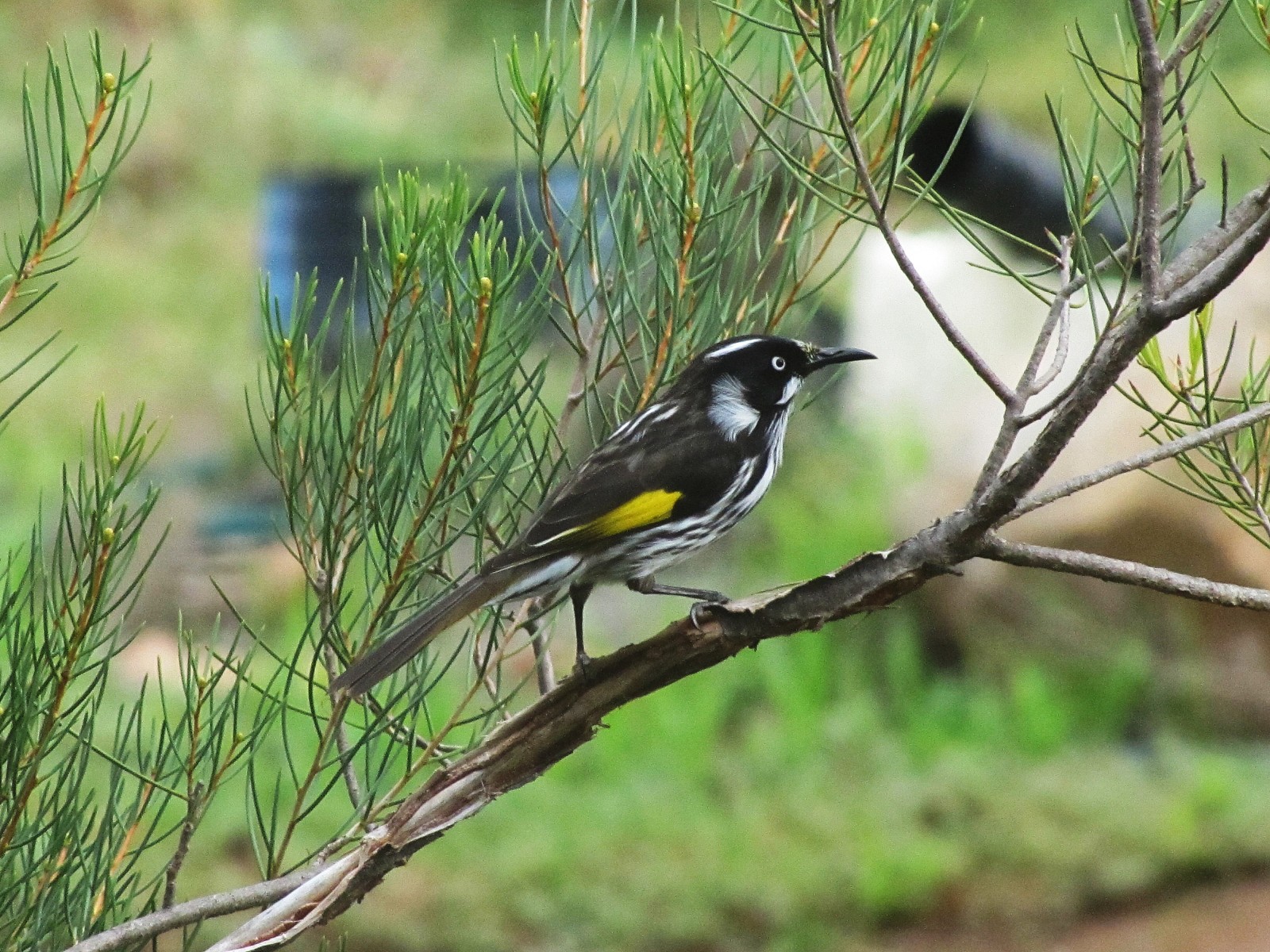
New Holland Honeyeater in our garden
Followers of this site may also be aware that I also write regularly about birds on another site of mine – Trevor’s Birding. The site also includes many hundreds of photos of Australian birds taken in my garden and on my travels around Australia. More recently I have included photos and articles about birds seen on a recent holiday in Ethiopia. Over the coming months I will also feature birds seen in both Morocco and Spain. What I experienced with my family on that holiday is also featured on another of my sites, Trevor’s Travels.
The birds in our garden in rural South Australia are a constant delight to us and visitors to our home. There is a constant stream of birds going from tree to tree, flying overhead or feeding on flowering bushes. I frequently photograph them and also write articles about them. From time to time they also inspire me to write poems or even short stories featuring the birds I see.
Writing prompt: take out time to watch the birds in your garden, or a nearby park, beach or river bank. Write a poem about one of the birds you see. If you would like comments about your poem, post it in the comments section (maximum 40 lines).
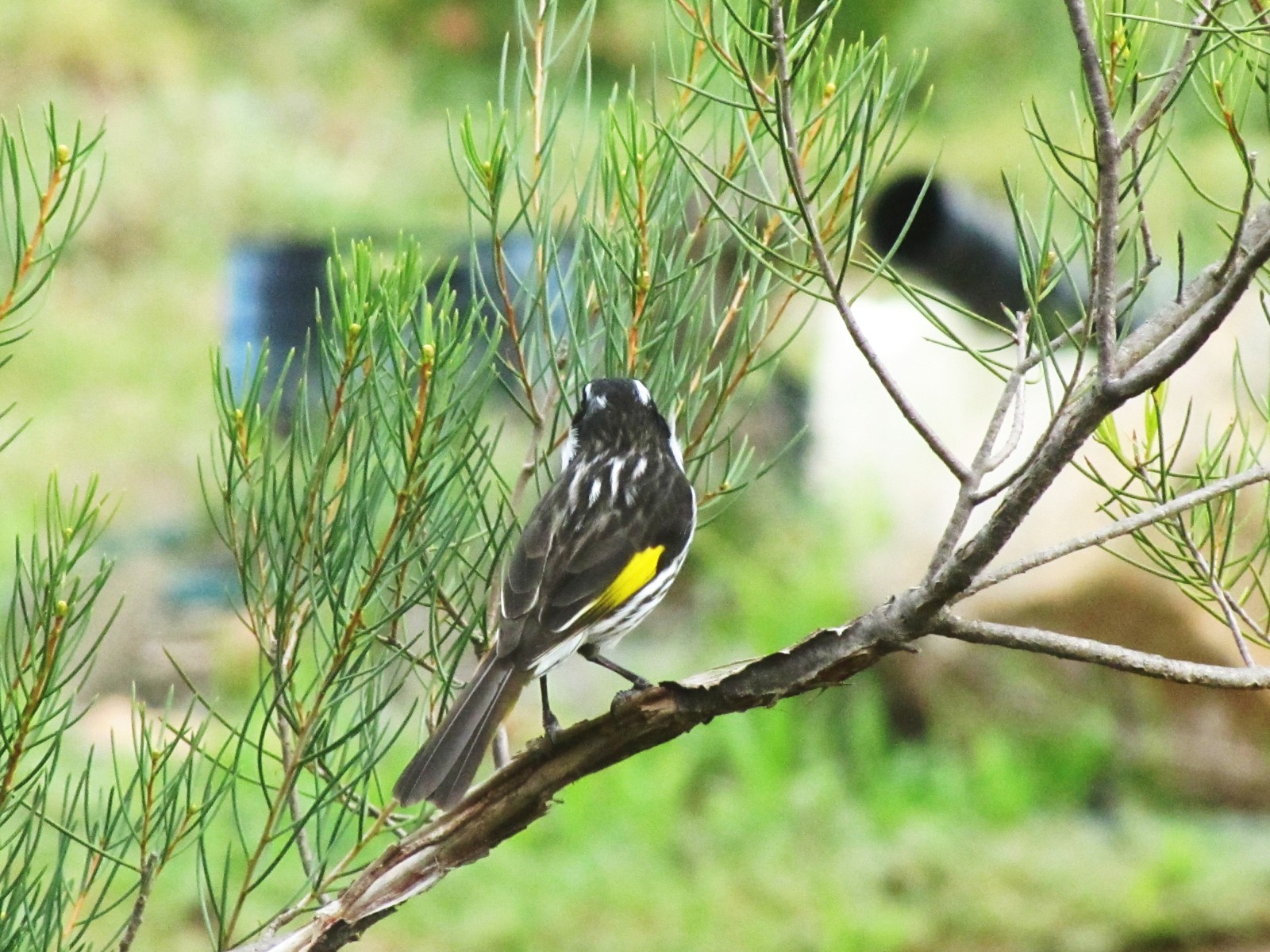
New Holland Honeyeater in our garden
Doing some weeding instead of writing

Red wattlebird feeding on Eremophila flowers
Gardening
Over recent days I have been spending more time out in the garden than at my computer attending to my writing. The spring weather has generally been wonderful and the spring rain a bit above average. The rain has come at about the right intervals to promote and maintain weed growth, hence the need for me to spend a great deal of time in the garden.
A big garden
Let me hasten to add that our garden is no ordinary quarter acre block common to many Australian homes. We have 5 acres (2 hectares) of land on the edge of the rural city where we live here in South Australia. It’s a challenge to look after and demands one keep on top of things.
Neglect
Sadly, the property has been quite neglected over the last 3 years while I completed my Master of Arts in Creative Writing. Now that I’ve graduated I can focus a little more on the extras – like gardening. One of the most time consuming tasks in recent weeks has been keeping on top of the weeds. We have planted many native Australian plants – like the one being enjoyed by one of our resident birds shown in the photo above. For these plants to really thrive I need to maintain a weed free zone around them. The weeds have a habit of taking over and choking out the growth.
Weeding my novel
This time last year I was doing a different kind of weeding. I was working very long hours – sometimes 10 to 12 hours a day – trying to get my novel into shape. The novel was my thesis paper for my degree and it had to be as near to perfect as possible. I spent many tiring hours weeding out all unnecessary words, phrases and even paragraphs. Every novel, short story, poem or article needs this treatment. Make every word count, weed out every lazy, useless and careless word.
You’ll stand a much better chance of getting your writing accepted for publication.
Good writing.
Hello honey!
I had a rather strange encounter with a honey bee recently. It’s behaviour still puzzles me.
A few weeks ago I was sitting on our back veranda enjoying the morning sun on a coolish day and partaking of my morning cup of coffee. I also had a good book to read and all was right with the world.
My enjoyment of the day, the coffee and the book was rudely interrupted by a buzzing bee. It came up close to my coffee mug on the table, hovering only millimetres from the bright blue flowers painted on it. The bee did several close circuits of the mug and decided that the flowers weren’t the genuine sort and with no prospect of a feed.
It then proceeded to hover as close as several centimetres from my face, as if checking to see if I might be a source of nectar. It did this for about ten seconds before flying off to more promising places.
Perhaps it was chastising me for not having real flowers on my coffee mug.
Three enemies of writing
Writing can be both wonderful and frustrating.
When a story or poem is coming along fine, everything is wonderful. When a novel is turning out the way you want it to, and the words are flowing, life is glorious.
But the writer’s life can also be frustrating. Your family, friends, life and sometimes even the Universe conspire to prevent you from your first love, writing. They can become great burdens, or enormous hindrances to The Creative Life.
But lurking underneath these obvious mountains preventing the next publishing sensation from reaching the shelves of our favourite bookshop are three not-so-subtle enemies of our writing life.
Enemy #1: Procrastination:
I think I could write a PhD thesis paper on this topic.
If I ever get around to it, of course.
Procrastination is Enemy #1 of too many writers. Consider these statements:
- “I never have any good ideas for stories.”
- “I’m too tired to write.”
- “I’ll start that novel – on the weekend.”
- “I’m too busy at work but I’ll write when I retire.”
- “My computer has died.”
Don’t let these be your excuses: just do it.
Enemy #2: Lack of Momentum
Momentum – or rather lack of momentum – can kill off a brilliant career in writing before you even get started. And if you do get started, and life gets in the way, lack of momentum can bury the body. It is so hard to get something like a locomotive moving, but once started, it builds its own momentum and before you know it, a runaway train is thundering down the mountains taking all in its path. Starting a train is like starting a story or novel; once it gets moving get out of its way and let it choose its own path. A little bit of writing every day – consistently without fail – is far better than leaving it for the weekend, or the holidays or retirement.
Enemy #3: Timewasters
Time wasters speak for themselves.
If you are doing something other than writing, no matter how interesting and worthwhile, there is no way you can reach your writing goals. (You do have writing goals, surely? They can be good motivators and can help keep that momentum going.) Identify your time-wasters and put them in their proper place. Some I grapple with include:
- Some television programmes.
- Checking Facebook and Twitter feeds many times a day.
- Checking my email several times a day.
- Unexpected visitors.
- Unexpected phone calls.
- Computer games.
Time management for writers is essential. Get those time-wasters under control and you will be more productive. (Note to self: take note of what I’ve just written – and apply it!)
Reader responses: in the comments tell me about your Writing Enemies, and how you deal with them. I’d appreciate that.
Good writing.
Why is my writing chair all wonky?
No Comments »20th February, 2011; Category: The Writer's Life
My office chair has suddenly gone all wonky.
If I lean only slightly to one way, it wants to go further. It’s quite disconcerting, especially when I am concentrating on my latest literary masterpiece. It has the effect of throwing me not only off balance slightly, but it also takes my focus off my writing. Not good.
My wife insisted I buy a really good “writing chair” for my office when I retired from teaching nearly seven years ago. (Is it really? How time flies when one is busy writing.) So I bought this great chair and it has endured nearly ten thousand hours of me sitting here grinding out literally one and half million words (yes – I do keep such records).
Poor thing. It probably needs to retire gracefully. Trouble is, I feel I am just getting under way with this writing thing. My best words are still coming. And I don’t want to go searching for a replacement.
I’ve turned the chair unceremoniously upside down a few times trying to work out how to fix it. Mmmm – seems there is nothing to adjust, tighten, loosen, fix or correct. Ah – there is a tension knob – a few twists of it seems to have improved it somewhat.
Why is my writing all wonky?
Sadly, this also happens with the words we write. A poem or a story or parts of a novel are all “wonky”. They need very close inspection to see if something is wrong. Only when the “wonky bit” is fixed will the story or poem work properly. Sometimes you can’t see it yourself, so it’s good to have another set of eyes to have a look at it. A critiqing group can also give good feedback.
Good writing.