Search Results for 'feed'

A wonderful sound in the morning
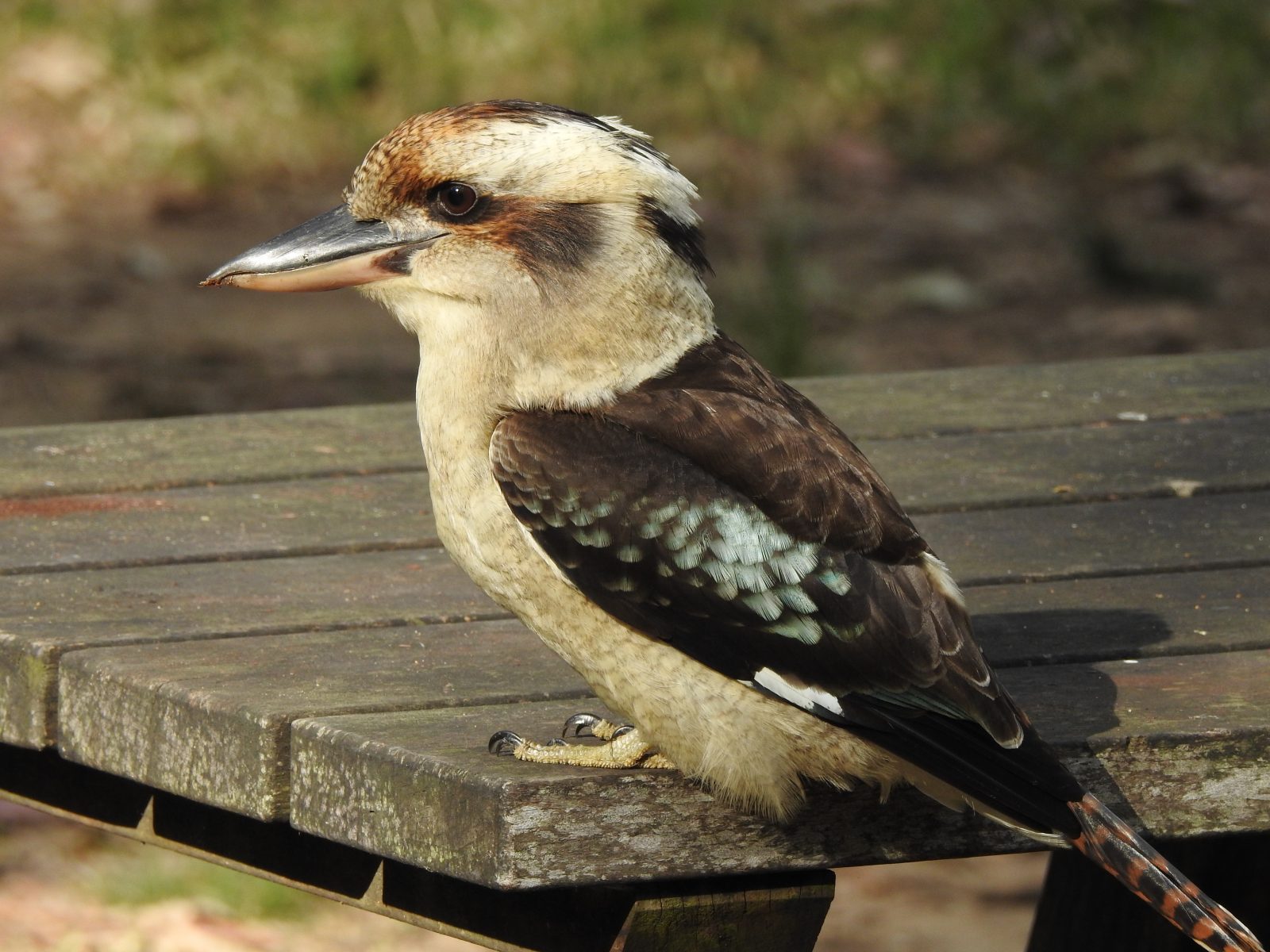
Laughing Kookaburra, Lane Cove National Park, Sydney

I love that wonderful feeling, first thing in the morning, when one wakes up after a good night’s sleep. That feeling of contentment on being totally rested. That feeling of cosiness in a warm bed on a frosty morning. That feeling of wanting to stay wrapped up in a comfortable envelope of blankets and quilt.

I had those feelings yesterday morning. Right about when the light of dawn was creeping into my room. My brain was still in neutral. I wasn’t yet fully awake, nor fully asleep.

Then all this suddenly changed.

From one of the street trees came the unmistakable call of two Laughing Kookaburras. This is the sound that is so delightful that I love hearing it. I rarely get to hear it at home in Murray Bridge, South Australia. But here, staying in Sydney with my son and his family, it is so commonplace that many locals probably are not even aware of it.

The joyous laughing call of the Kookaburra is completely iconic in the Australian bush. It is also readily heard in many urban environments as well. It is unmistakable; most people would easily recognise this call. There is nothing else like it. It certainly made my day yesterday.

Laughing Kookaburras only occasionally visit my garden. In fact, I have only recorded this species once in the last twelve years despite being present in many nearby locations. On the other hand, I have many other species of birds in my garden and many of them go a long way to filling the gap left by absent kookaburras.

I love hearing the carolling of the Australian Magpies which are a resident species in my garden. The delightful song of the Willie Wagtail is also an everyday occurrence – and sometimes at night when there is a bright moon shining. The various species of honeyeaters also join in the dawn chorus, and the endearing mewing of the White-browed Babblers is a joy too as they hop around outside my bedroom window seeking their breakfast.

When I am home there is only one bird sound I do not like to hear. For a few days some years ago a Little Raven came to my bedroom window around dawn and tapped loudly on the glass with its large beak. It was responding to the perceived threat from its reflection in the glass. It was very annoying.

Further reading:

Little Ravens feeding their young
Little Ravens caught thieving
A cheeky raven at Monarto Zoo
A short visit to Lane Cove National Park
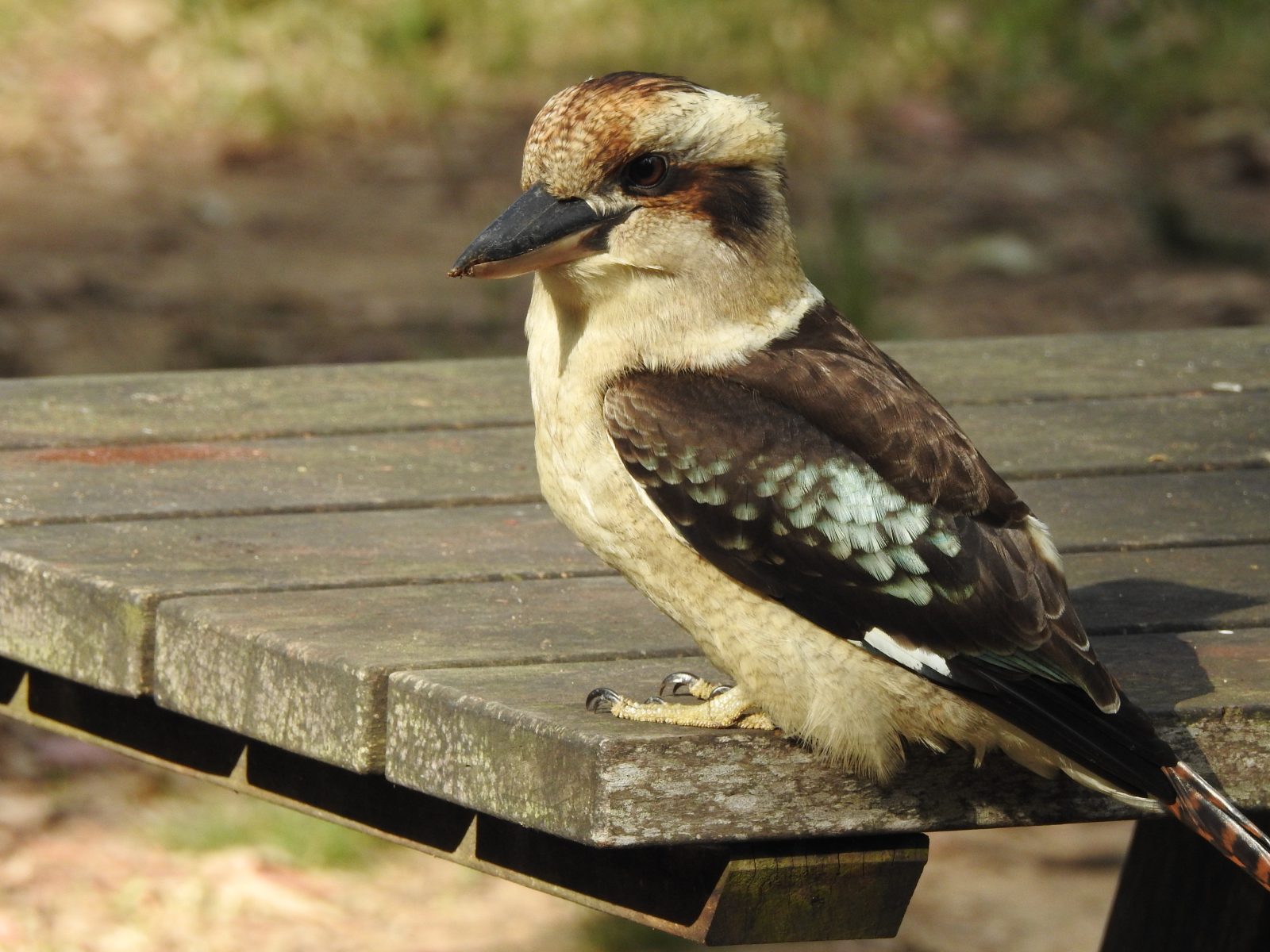
Laughing Kookaburra, Lane Cove National Park, Sydney

Doing the Writer’s Happy Dance

Last week I had an occasion to indulge in the Writer’s Happy Dance.

Well – I didn’t actually do a proper dance – more of a geriatric gyration. With lots of clicks and groans in my ancient bones.

The reason for this joyous occasion was a notification that one of my stories has been accepted for publication in an anthology. It also means that I am in the running to win a prize in a writing competition. The competition was jointly run by Radio 1079 Life (Life FM) and Tabor College. Tabor was where I did my Masters Degree in Creative Writing; I can highly recommend their creative writing programme which can be studied externally.

The competition is called “Stories of Life” and are based on true-life experiences and must contain some element of one’s Christian faith. I initially found it challenging to come up with a viable story concept, but once I started, the words flowed easily. I must admit that I put myself under a little pressure, leaving my submission to the very last day and posting it the website at 11:35 pm, just 25 minutes before the closing time of midnight. I always say that I shouldn’t put myself under so much stress, but it happens far too often.

The story I wrote was based on one of my experiences while travelling in Nepal about ten years ago. I thoroughly enjoyed my holiday in Nepal and vividly remember many of my amazing experiences. You can read some my experiences here.

Competitions

Submitting stories and poems to competitions is an excellent way of improving your writing skills. I must admit that I don’t do this nearly often enough. By pitting one’s writing against other writers, you get to hone your writing, editing and proofreading skills. Some competitions even give feedback from the judges. This helps you to further improve your writing until you regularly get listed in the short list or get a commendation from the judges. Winning some prize money is wonderful, of course, but this should never be the prime reason for entering. A prize is a lovely bonus. Constantly improving your writing should be your main aim.

When writing for a competition follow these simple hints:

  • Write the very best story you can.
  • Rewrite, edit and proofread the story until it sparkles. Or grabs the readers’ throats.
  • Read – and reread – the rules set out by the organisers.
  • Stay within the word limits, not too short and never over the maximum word count.
  • Read your story out aloud, or get someone else to read it – this will help you to find typos and errors in grammar.
  • Submit before the due date.

Poetry

The same rules apply to poetry, except that the organisers usually stipulate the maximum length and sometimes the theme. A few years ago I was delighted to actually win a national poetry competition. I not only did the Writer’s Happy Dance, I think I also gave a yell of delight. The prize money was a wonderful bonus, too. I can now put “Award-winning poet” on my resume – how cool is that? You can read some of my poetry here.

A personal goal

As I said above, I don’t enter nearly enough competitions. I have hundreds of suitable poems and dozens of good stories ready to go. It is one of those things I always intend to do, but I need to enter far more regularly. I do have this as one of the goals for this year, but I am a long way off reaching my goal.

Good writing. 

Trevor

Reflections on an old story

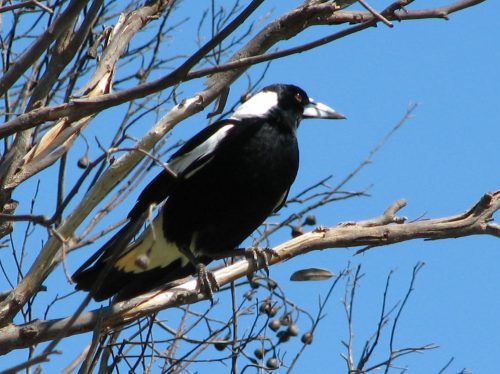
Australian Magpie

Australian Magpie

Memory lane

I have been having a trip down memory lane in recent days. I have been typing up an old story I wrote many years ago. In fact, the only copy I appear to have is a typed copy with 1989 on the title page. I was shocked to realise that this story was written nearly 28 years ago. It has languished ever since as one or two copies stored in boxes in our garage. The copy I am using was printed on an old dot-matrix printer. Remember those old clunkers?

Early computers

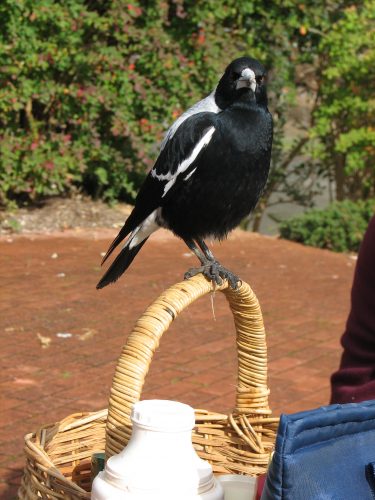
This story, called Magpie Farm (hence the photo of an Australian Magpies above and below), was typed on either a borrowed Commodore 64 computer or on the Amigo 500 I bought around that time. I can’t remember. I think that it was written during a school holiday break; I was a classroom teacher at the time. Those old computers were wonderful, and I learned so many things about the digital world from them. I still have the old Amiga – in working condition too, though I only fire it up every five years or so. Sadly, the old Amiga discs are not compatible with today’s PCs, hence the need to retype this story.

First novel

I am sure that this was my first attempt at writing a novel for children. At just under 10,000 words it is probably better described as a chapter book. I have since written several more novels for children, of varying lengths and subject matter. I am planning to prepare these for publication sometime this year. They will initially be in eBook format with print on demand paper copies also available.

Background to Magpie Farm

As I type up this story, I recognise many incidents from real life. The main character is a young boy who is afraid of magpies. Some Australian Magpies are notorious for their tendency to swoop people during the breeding season. The boy’s family move to a small farm and he is horrified that there are magpies on the farm. Some of the incidents I have included in the story are drawn directly from my own family’s experiences. A few years before writing this story, we also bought some acreage, though five acres (two hectares) can hardly be called a “farm”. We did have some sheep for a while; I’m not sure if that qualifies it as being a farm.

A problem

I have a serious problem with the story. Several problems, actually.

It is terrible.

Honestly – it needs some serious editing, rewriting and restructuring. The problem is that I have decided to be very strong as I type it up. I tend to edit as I type. This applies to most of my writing these days. The first draft is often very close to the final draft. I rewrite, edit, proofread and so on as I go. Not always, but usually that is my preferred writing style. This time I decided to be very strong and resist all urges to stop and rewrite, edit or change anything. Those steps will come later.

Why is it terrible?

As I type, I find myself wincing often. How could I have written such terrible prose? The dialogue between characters is not all that bad, but the rest of it is quite naive – almost childish. This shows up three basic things:

  • I have certainly progressed a long, long way as a writer in the intervening years.
  • There is much good material in the story which can be vastly improved.
  • I now know what is wrong with the story and the writing, and how to fix it; that comes with experience and heaps of writing practice (over 3 million words later, and counting).

Where to now?

I still have a few chapters to type up. Then I will spend a week or two rewriting whole slabs of the text to bring it up to publishable standards. Later will come the proofreading and copy editing stages before I send my baby out into the world. After that, I have two other longer novels written several years later and they will both need the same treatment.

Is it all worth it?

If the story as it stands now is so terrible in my own eyes, is it worth pursuing and putting in all that work? I believe so. I take this attitude, not because it was my first serious attempt at a novel, but because of feedback from readers.

  • At the time I printed out a number of copies and handed them out to friends. They all commented how good it was, and how much they enjoyed it.
  • I also read it to several classes I was teaching at the time of writing. I still have contact with many former students who remember the story well.
  • I was asked recently by one former student if I had published this story. He added that it had a profound, positive effect on him. It inspired him to become a writer. He has published some of his writing, he has participated successfully in performance poetry events, and he wrote and performed in a musical which was showcased last week at the Adelaide Fringe Festival. This festival is regarded worldwide as second only to the Edinburgh Fringe Festival.
  • Wow! I love feedback like that.

Stay tuned

I plan to publish this chapter book (novel?) in the near future, so stay tuned. The launch will be announced on this site, and it will be available through this site.

Good reading. Good writing.

Trevor

Further reading:

  • Trevor’s Birding – check out another blog of mine where I also write regularly about Australian birds. I showcase many of my bird photos on that site.
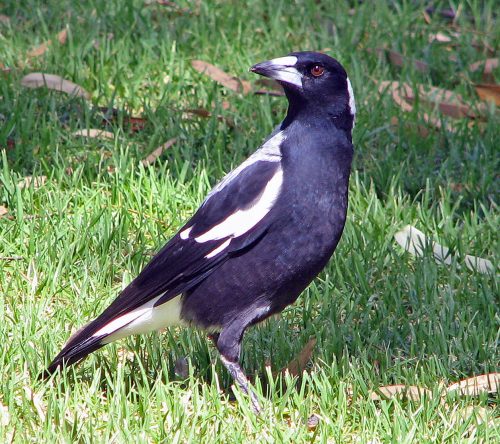
Australian Magpie
Australian Magpie

Australian Magpie

Australian Magpie


Short story starters

Over the last few years I have written many posts similar to this one. Many of them have proved to be very popular with my readers and consistently draw many readers. I have also had good feedback from readers who have used them.

The idea behind these lists is to start your thinking off on a certain track – and then to let your imagination run wild. Use any of these ideas as you like, adapt the ideas to suit your thinking and away you go.

Each one could be used as an opening line, or a finishing line, or a sentence somewhere in your story.

Story starters

  1. ‘How on earth could you think that about me?’ shouted Nancy.
  2. Olivia hesitated as she came into the room. Her handbag was not where she had left it.
  3. ‘Now where have I put my glasses?’ muttered Peter.
  4. It was strange how Queenie always found a way out of her frequent moments of embarrassment. Like yesterday.
  5. As Robert closed his front door, he drew his coat tighter against the bitter wind. ‘What a night.’
  6. Sam raced to the letter box, flung it open and grabbed the only letter. “Yes! This must be it!’
  7. ‘How can you be so sure it was me?’ demanded Tina. ‘I wasn’t anywhere near you when it happened.’
  8. ‘If that is how you feel,’ said Ursula, ‘this is the final straw.’
  9. Vince was completely flummoxed. How was he going to get out of this toxic relationship?
  10. ‘That will do!’ yelled William. ‘That is the perfect spot for my pride and joy.’

You can access many more short story starters here.

Conditions of use:

  • Feel free to use any of the story starters listed above. Change anything to suit your needs.
  • Give it your best shot.
  • Edit your work carefully before sending it off to a publisher or posting it on your blog.
  • Let me know in the comments section how it went.
  • If you publish your story on your web site or on your blog let me know so I can make a link to it for others to read.

Fiction #47 Leon

Fiction #47 Leon

Leon wasn’t the sharpest chisel in the set, but he was my mate in primary school. His father farmed the property a mile down the road. Despite being so close Leon and I rarely played together out of school hours. I didn’t have a bike – in fact I didn’t have a bike until I was married with two children – and Dad never saw the need for me to have a bike. And Leon couldn’t come over to my place to play because he had so many responsibilities around the farm.

His father was so disorganised he needed Leon to tend to various animals on a daily basis, feeding and watering as required. He was expected to do the rounds of the animals from a very early age, starting before going to school each day and continuing after school.

They had about a dozen chooks that laid the odd egg or two for breakfast, a family of ducks that pooped all over the paths and lawns, four pigs being fattened for eating someday but never reached the slaughter house, three cows, a horse that no-one could remember the last time anyone had ridden him, and flock of almost wild geese that roamed the farmyard around the sheds and the adjoining paddocks like they were the sole owners of the entire countryside. No-one ever messed with those geese if they wanted to remain unscathed.

I was in the same classroom as Leon. In fact, all of the children of the district shared to same room in the one teacher school. We were also in the same class in Sunday School in the local – the only – church in the small mallee town where we grew up. Most of the community were Lutherans; the few who weren’t Lutheran worshipped nowhere as the distance to the next town was too great to travel to church. People weren’t as mobile in the 1950s as they are today.

On one infamous occasion the teacher’s wife, a wonderful woman who never said or even thought ill of anyone, came to a church service one Easter. Being of the Churches of Christ denomination she was not only astonished but somewhat offended when she was refused permission to receive Holy Communion in the Lutheran Church. That was probably a watershed event which led me to one day abandon my membership of the Lutheran Church.

Leon’s faith was as simple as mine was complicated. He simply believed in God and took to heart all the stories about Jesus and Noah and Samson without question. God was God and was to be obeyed and feared. My faith by way of complete contrast was a convoluted expression and awe inspired mixture of love and fear and amazement. God was indeed to be feared, but he was also, through the expression of his son Jesus, an amazing example of love, a God who desired love in return. Fifty years later Leon still has an uncomplicated faith while I still have a cocktail of faith elements swishing around in my mind. I might manage to work it all out – providing I live another thirty or forty years. I am a work in progress.

Leon was a truly laconic Australian boy. I think he was the one they had in mind when they invented the word. He spoke with a deep, drawn out drawl, never getting excited in thought or speech. He could lull you into slumber with a drawn out description of wrestling with a reluctant bull for an hour when trying to load him on to a truck. After every sentence or two he would throw back his head and laugh, the deepest laugh I can ever remember hearing; slow, deliberate and taking delight in the memory of his misfortune and seeing the funny side of everything. It was the laugh which kept you from nodding off during one of his recounts of farming life.

Student life and Leon never became close friends. He never made it to high school; he was needed as an unpaid farmhand from an early age. In fact, I believe he even had to regularly ask his father for money when he eventually married. Leon survived primary school as best he could. He barely learned to read and write, but then, farmers didn’t need those skills to succeed on the land in the 1960s. He never excelled at anything academic in complete contrast with my levels of success. I managed to set new levels of excellence in all subjects attempted during the examinations in my final year, records which still stand because the school closed its doors for good several years later when all the children were taken by bus to the nearest large town.

Our friendship was a strange one; opposites attract they say. Intellectually we were poles apart, spiritually we saw life quite differently, emotionally I was a see-saw while he was a solid rock and physically he was tall, strong and stocky while I was short, thin and weak. Yet there was a bond that drew us together, a bond usually only felt by close brothers.

I cannot explain it, yet it was real, tangible. And long lasting. Only last year we were at a funeral and met up again after many years apart. He took one look at my bulging waistline and commented in a way only Leon could, ‘Looks like you’ve been in a good paddock.’ Only a friend like Leon could get away with a statement like that and not offend me.

© 2015 Trevor W. Hampel

All rights reserved.

Notes:

  • Although I have listed this piece of writing under fiction, some of it is true, based on a real life. Mine.
  • This piece was originally written as a warm-up writing exercise.
  • You can read more of my stories here.