Short Fiction: “Well – I’ll be blowed!”

You could have knocked me down with a feather when Suzy came to visit. I hadn’t seen her for donkey’s years. In fact, she only ever visited us once in a blue moon. Now the reason she rarely comes to visit us is that we really don’t see eye to eye. In fact, she thinks I’m off my rocker and I think that she’s gone bananas!

The truth is – she really is a pain in the neck. You see, Suzy loves the sound of her own voice; she never stops talking! Even telling her to put a sock in it doesn’t help. The last time I saw Suzy I said that she was as nutty as a fruitcake and that she was driving us all up the wall.

Now, the day that Suzy came to visit was a red-letter day. I’d had a splitting headache all morning and it felt like I had a frog in my throat. But I soon forgot how ill I felt when Suzy knocked on the door. The first thing I noticed was how she was dressed. Normally she is so untidy in her appearance, but not today. She was done up like a Christmas tree.

The second thing I noticed was her behaviour. Normally she is really off the planet. But on this day she was as quiet as a mouse.

‘Please,’ she whispered with tears in her eyes. I could tell at once that these were not crocodile tears.

‘I need help,’ she went on. ‘I’ve been shaking in my boots all day. I think I’ve really blown it.’

I’ was standing there like a stunned mullet. This was definitely not like Suzy. She wasn’t one to cry over spilt milk.

‘P-p-please, come in,’ I stammered. ‘Here, sit down and spill the beans to me.’

It’s like this,’ she began. ‘I was going to surprise Mum when she came home from work. I decided to make the house as neat as a pin. Then I was going to cook up a storm for tea. I thought it would be a breeze, as easy as falling off a log. How wrong I was!’

‘What went wrong?’

‘Well you know how it’s been raining cats and dogs all day. So that meant my little brother Sam had to play inside. It wasn’t long before he was getting in my hair. He was constantly getting under my feet. I even asked Sam to lend me a hand. That was a big mistake. Because he had been trapped indoors all morning he was ready to let off steam. I nearly jumped out of my skin when he tried to give the cat a shave. Later he tried to give all the pot plants a haircut with Mum’s best dressmaking scissors. Boy, were we in a pretty pickle.’

Suzy stopped for a moment. A tear rolled down her cheek.

‘I nearly screamed my head off for him to stop,’ she went on. ‘I nearly blew my top. I knew our goose was cooked when Sam decided to spray paint his room – BLACK! So I spat the dummy and came to you for help. I think I’m going round the bend. Any more of this and I’ll be round the twist for sure. All my friends already suspect I’ve got marbles in my head; now they will be certain. What should I do?’

‘Well,’ I began, not quite sure what to say. ‘The fat’s really in the fire, isn’t it? The problem seems to be with Sam. He really is out of line. He needs to turn over a new leaf. He is up to his neck in trouble this time. You need to talk firmly with him. Call a spade a spade. Don’t beat around the bush. Pull no punches. He has to hold his horses. Sam needs to pull his head in and stop monkeying around. If we don’t stop him now he will continue doing this until the cows come home.’

‘Yeah, monkeying around,’ said Suzy bitterly. ‘That’s all he ever does. And that’s where he belongs – behind bars in the zoo with the monkeys!’

Copyright 2007 Trevor W. Hampel. All rights reserved. First published in “Freexpression” March 2005.
More about idioms

Over the time I have been writing on this blog I have written a series of articles about idioms. Idioms are those colourful expressions we use liberally in our speaking and writing, but if taken literally they become rather silly.

For a longer discussion on idioms, read my article called What is an idiom?

To read more about various idioms, their origins and possible meanings search through my archives in the idioms category here.

Over the next few days I plan to publish a series of stories that contain dozens of idioms. I hope that you enjoy them.

To err is human – to proofread is to be a good writer: Seven effective proofreading hints

Don’t you just hate it when you have slaved over a piece of writing for hours, printed it out – only to find an error embedded somewhere in the text? Perhaps it was a typo, spelling error or glaring grammatical boo-boo.

Here is a list of seven very effective hints on doing away with those errors – or at least minimizing them:

  1. Give it away: As writers, we get too close to what we are writing. As we proofread we tend to read what we intended to write, rather than what we actually wrote. Get a trusted friend or family member to read through it. I often ask my wife; she can be meticulously severe on my writing. And that’s what you want – not someone who says, “Very nice,” but doesn’t want to offend you by pointing out the fifty three glaring errors you’ve overlooked.
  2. Let it sleep for a while: If you do not have a pressing deadline to meet, let the piece of writing sleep for a while. Come back to after a few hours, days or weeks. Fresh eyes will see errors that were hidden when you first wrote the piece.
  3. Have an audience of one: Read your writing aloud to yourself. Or to the dog, cat or canary – whoever. If you stumble over a phrase or sentence when reading aloud, so will your readers. If something doesn’t quite make sense to your ears, you will surely lose your readers at that point.
  4. Writer – know thyself: Be aware of weaknesses in your writing style, spelling abilities and grasp of grammar. Focus particularly on those weaknesses until you master them or you will be their slave forever. I have to be particularly careful of the spelling of some words because they almost always trip me up. Get a good dictionary.
  5. Turn down the volume: Sure – some writers can produce wonderful prose with the stereo blaring in the background, or the television on, or five screaming children running riot through the house. Some have no choice. I know I work best when there are few distractions and a minimum of noise. I know I can write in a busy, noisy environment – I was an elementary school teacher for thirty five years after all! My best writing, however, comes from a calm and quiet environment with few distractions.
  6. Print and peruse: Proofreading on a computer monitor is a very difficult task. Print out a hard copy and proofread that; you’ll find it easier to seek out those errors. Get a red pen and go to work.
  7. Play it again Sam: Well…maybe not. But it is important to read your work over and over and over again until you are sure it is free of errors.

Good writing.

PS: I’m hoping someone will proofread this for me; my favourite television programme is on in a few minutes. So much for those distractions!

UPDATE: I’ve just discovered another great article on proofreading called “The Impotence of Proofreading.” Read at your peril – there are deliberate errors embedded in the text.

Writing through the storms of life

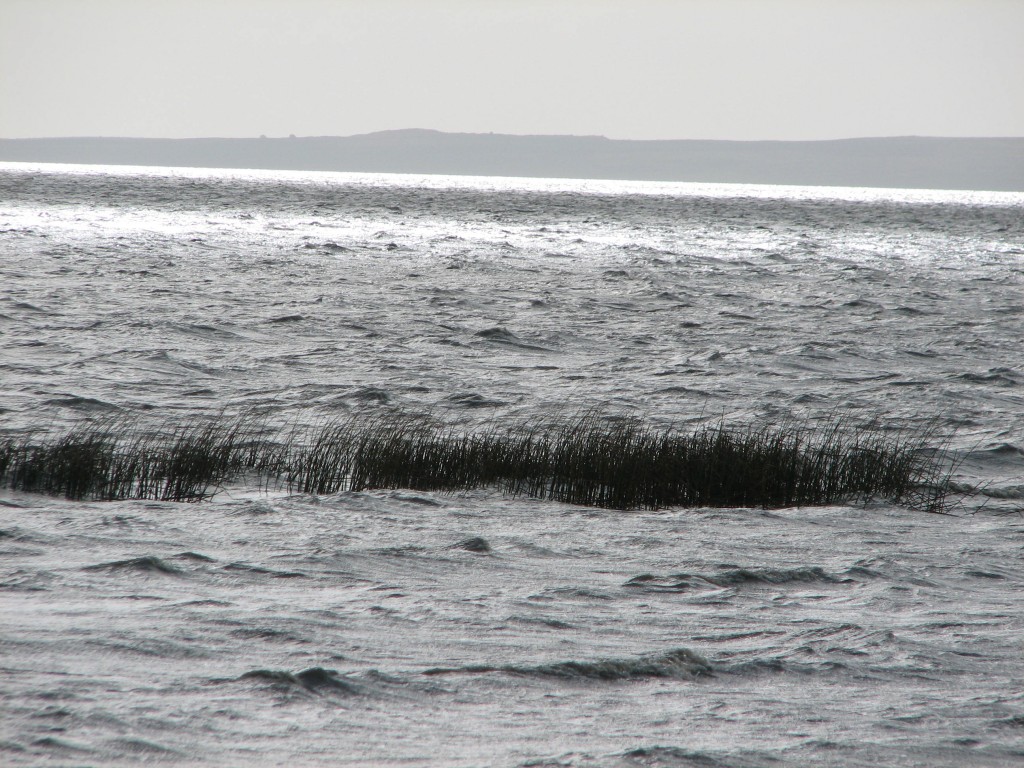
Lake Albert, Meningie, South Australia

Lake Albert, Meningie, South Australia

Life throws up a few interesting storms from time to time.

Last week we went for a short five day holiday in Robe in the south east of South Australia. It wasn’t long enough to really relax, but we did have a good time despite several days of poor weather. On the first day in particular it was really dark, wild and stormy. I’ve written in more detail in It was a dark and stormy day on my birding blog.

Storms can interrupt the normal activities of life. We may have to cancel that picnic. We may have to make alternative arrangements for other outdoor activities. Many times storms bring damage to personal property – and can even injure us bodily.

Environmental storms can take many different forms. Many times we can see the storm approaching and make suitable preparations to avoid personal damage, or property damage.

More subtle, however, are the storms in life that we don’t see coming. Illness, career disappointments, setbacks, death, accidents and many other happenings can come on us unexpectedly. How we deal with them can set us apart from others.

Writers are not immune from the storms of life. Turmoil in the family can easily result from any unexpected event that causes distress. As a writer I find it very hard to focus on the writing task at hand when there is some crisis or problem to be faced in my life, or in the life of someone near and dear to me. Sometimes our priorities need refocusing. Sometimes the needs of others – or our own needs – must take priority over our writing. This can be a hard truth to come to terms with, but face it we must. Facing the problem with bitterness or anger can only lead to regret later. Staring the problem squarely in the face in defiance can strengthen us as people. The strongest trees have been battered by the storms – and have survived.

When the storm abates – and it usually does – get back to the writing with renewed vigour, enthusiasm and resolve. You are now a stronger, wiser person for the experience. Draw on that renewed strength and bring it to your writing.

Good writing.

Back to writing again

It has been a while since my last posting on this blog.

Three weeks in fact.

I’ve been busy – very busy. We’ve moved house. We still live in the same house but we’ve moved the furniture around in three of the rooms. I now have a “new” office. It is much more spacious than my old office and the view through the window is great though I now realise that the garden needs some tender loving care.

The move included emptying the old office completely ready for new carpet to be installed. We had furniture everywhere for a few days. Then we had boxes of gear piled up everywhere. Gradually things are taking shape again and we are gradually getting organised. I must post a photo of my new office; the bookshelves look most impressive.

Another interruption to my writing occurred last week. We went away for a short five day holiday with our daughter. This was far too short but still the experience has given my writing a great boost. Over the five days I gathered plenty of material for writing. The seaside has this special effect on me.

There was an interesting side issue to the break away from home. I took my laptop with me intending to do some writing while away. I never took it out of its carry bag! Instead I managed to read half a novel, the first time I’ve done this in many months.