Idiom #7: A little bird told me

This week’s idiom:

“A little bird told me.”

Origins:

This idiom is thought to have come from the Old Testament in the Bible, namely Ecclesiastes 10:20.

“Do not revile the king even in your thoughts,
or curse the rich in your bedroom,
because a bird of the air may carry your words,
and a bird on the wing may report what you say.”

Meaning:

It is used by people to state a fact from a secret source.

Example:

“How did you know that I came first in the race, Grandma?” said Laura.
“A little bird told me,” replied Grandma.

See also my article “What is an idiom?”

Short Fiction #25 Fireplace

Fireplace
Flames caressed the logs. Smoke curled upwards. The glow flickered through the room, casting shadowy movements on the walls and ceiling.
“Time for bed,” said James. Elizabeth
kept staring at the fire. She snuggled even closer to James.
“Not yet,” she whispered.
The grandfather clock chimed midnight.
“It’s really getting late.”
“I know.”
James yawned. Elizabeth cuddled even closer. A log broke open; a stream of sparks flared upwards.
“I really love this house,” said Elizabeth. “It’s so cosy, especially when we have a fire.”
“Yes,” replied James. “And I really feel cosy every time I chop the wood.”

All rights reserved. Copyright 2006 Trevor W. Hampel.

Travel writing: an interview with Pico Iyer

Travel writing has not really interested me until my first trip overseas last December and January. My trip to Thailand and Nepal suddenly gave me a great interest in this genre of writing. I wrote extensively of my experiences in a journal, which I later transposed into short articles on my travel blog (click here). Unfortunately I have not really had the time since returning to investigate the many interesting books that have been written by travel writers. That delight still awaits.

Pico Iyer has travelled all over the world as a travel writer. I recently read the transcript of an interview with him. It is a very long interview. In it he describes how he goes about researching his topics, what he looks for in a place and how he goes about his writing. It has much to commend it for all travel writers. He particularly gives a focus to the literary qualities of good travel writing, and to the barriers that travel writing causes many readers.

“I think travel writing has a hard time appealing to people who haven’t traveled and who don’t see a book on place as a literary text in the way they would see another nonfiction book, and that’s one of the hurdles that I don’t know how we can surmount.” Pico Iyer

Link:

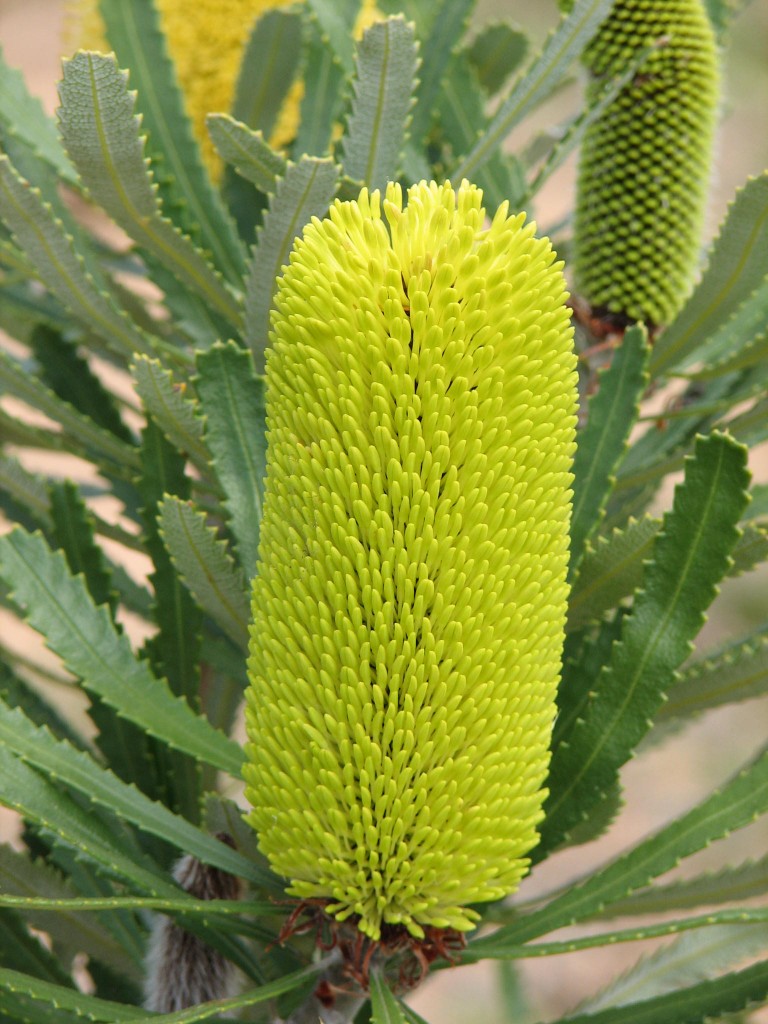
Poem #17 Banksias

Banksia

Banksia

Banksias

The
Golden
Candles
Glow
Strongly,
Lighting
The
Grey
Bush
With
His
Touch
Brightly.

All Rights Reserved. Copyright 2006 Trevor W. Hampel.

To read more of my poetry click here.

Writing Hint #18 Write every day

Many people say they want to be a writer.

Many people dream about being a writer.

Many people read about being a writer.

Many people attend writers’ groups, seminars and conferences about writing.

Few people actually get to write.

Something happens to their dreams, their desires, their ideas and what they have been taught. There is no short cut to success in writing. It takes discipline, hard work, long hours and a few aches and pains. (As I write this my posterior is rather sore after over six hours at the computer, despite taking regular breaks.)

I recently read this quote in a newsletter I receive regularly. It makes the very point I am trying to get across.

“Back in the 60s, my undergraduate university days, I had a poet
professor who insisted that all serious writers were
self-disciplined, wrote something daily, and almost never were
plagued with writer’s block. It took me a decade to internalize
all that, but for about 30 years now I do write everyday. The
seasons come and go without slowing me down creatively. Whether
snow falls or rain pours or sun shines brightly, I continue
writing poems, stories, letters, and books. I love to write, so
why would I let even one day go by without doing what love?”

Dawn Copeman

Setting yourself the goal of writing everyday is an excellent one. Over the course of a year it will surprise you how much you have accomplished. Do this over five years and you will be astonished at the vast body of writing you have achieved.

Set small goals at first:

Set small goals to start with, especially if you have a busy schedule. If you wrote 500 words a day (this article is just over 400 words long) you will write a 5000 word short story every two weeks (allowing time for editing and revision) and 26 such stories a year. The same word count will write a 100,000 novel in about seven months. After a few months of practice 500 words should take no more than about an hour.

Set bigger goals:

As your confidence and skills grow, set more challenging goals. Plan to write a minimum of say, a 1000 words or two hours every day. Without fail. That’s discipline. That’s hard work. That’s being serious about your writing. If it is just a hobby, treat it like a hobby. If you want to taken seriously as a writer, treat it like a business.

Remember:

  • Read every day.
  • Write every day.
  • Take time for yourself every day.