Writing Hint #37: Take a break

The writer’s (and blogger’s) life can be tedious. It can also be lonely.

In your writing life you need to have times of refreshment, times of relaxation, times of recreation and time out from writing and blogging. It is important to have a social life, to get out there with friends and family and essentially to “get a life.” Staring a computer screen 16 hours a day for weeks on end is a sure way of driving you stir crazy. Sometimes when a project is due, or it needs to be finished, long hours are needed. Granted.

Start scheduling days off. Most workers have days or weekends off, so why shouldn’t you? Your writing will benefit greatly from the time of relaxation because you will come back to it with renewed enthusiasm and fresh insights.

Schedule a holiday where you get a substantial block of time completely away. I recently had a 24 day driving holiday in the eastern states of Australia. I only wrote a short journal entry in the evenings, and not every day. The experiences I had while away will keep me inspired for months. (The downside is that it has given me the desire to travel more. Not a bad thing I guess, especially if it inspires me.)

Get a life.

Take a break.

Good writing.

The Adventures of Nancy – my new bed

Nancy in her new bed

Nancy in her new bed

Hi there,

This is Nancy again.

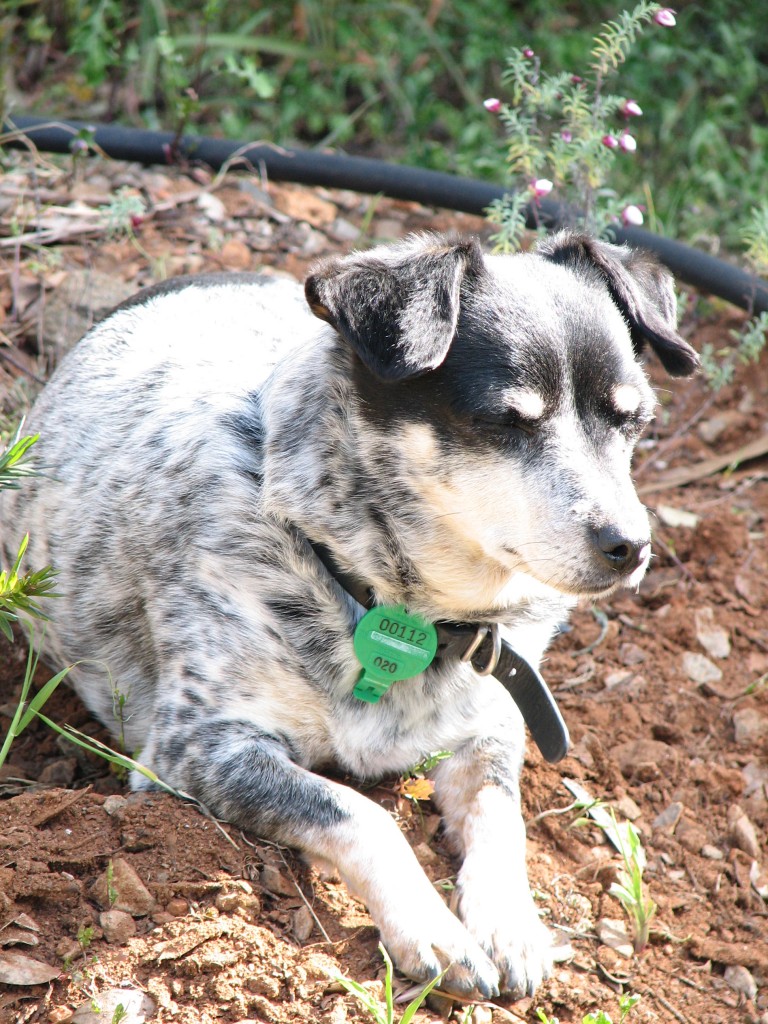
Wow! Look at my new bed in the photo above. My Mum bought that for me recently. I’ve been meaning to show it off but Mum hasn’t taken a photo of it yet. So I sneakily set up Grandpa’s digital camera to take a self portrait. I’m so clever.

I love my comfortable new bed. It is so warm and cosy and just the right size for me. And there is no room for my friend Butch. Anyway, he has his own bed AND a bean bag. I wish I had a bean bag. He won’t share his. He gets jealous.

Well, it’s nearly time for bed. I feel so sleepy, and that nice warm bed is calling to me.

Good night.

Talk to you soon,

Nancy.

How to be a more productive writer or blogger

The writer’s life is a minefield of potential distractions. Getting control over these distractions is the key to being a productive writer or blogger. Here is a list of some very practical things you can do to increase your productivity.

  1. Write first: ignore the email and RSS feeds first thing in the morning. Get a substantial amount of writing and editing done before you allow such distractions. In most cases the incoming emails will not generate income, but your writing has that potential. Put first things first.
  2. Turn off the television: switch off that huge distraction in the living room. Better yet – get rid of it. If you must have a television, limit yourself to only a few select favourite programmes. Record these and only watch them as a reward for reaching your writing goals.
  3. Turn off talk back radio: I know this is a particular problem for me. I enjoy listening to radio but it is so distracting I get nothing done, so I rarely allow myself this distraction. The world will still go on if I don’t listen.
  4. Set firm goals: if you have no set goals for your writing and blogging you are on a slippery slope. Set firm goals, strive hard to achieve them and constantly monitor your progress on a daily basis.
  5. Remove games from your computer: I used to have a problem with this in the early days of computing but it rarely concerns me now. These days I only use them for relaxation or as a reward. Sometimes months go by without playing a game. Get control of this distraction or it will control you.
  6. Take the phone off the hook: this can be a problem on some days for me and I’ve been known to take this drastic step. If you receive many business calls related to your writing, this may not be a practical solution. Consider letting all calls go to the answering machine, then do all your calls back in a block at a more convenient time. This is a more effective use of time. Train your friends to only call when you are not writing, for example, in the evenings.
  7. Carry a notepad: When you are away from your computer always carry a notepad. Waiting in line at the supermarket, in the doctor’s waiting room, waiting for the traffic lights to change, in a train or bus or plane, use those precious minutes to write. Jot down blog or story ideas. Do a character sketch, write a plot outline, make a “Writing To Do List.”

Share your ideas:

Now that you’ve read my list, I’m sure you will come up with other strategies for being more productive. Share them in the comments section so we can all benefit.

The easy part:

Reading this list is the easy part. The application is the hard part.

Good writing.

The Adventures of Nancy – a tasty delight

Hi there,

Nancy here again.

It is easy for me to access Grandpa Trevor’s blog at the moment. I’m having a little holiday with him while my Mum goes camping with some friends of hers. He is often busy doing other things so I just sneak in to the office and use his computer.

Yesterday I went out to help supervise Grandma Corinne in her native plant nursery. She needs me to keep her on task. Every now and then I have to go over to her and she rubs my back. This is to remind her that I love her, and that she needs to keep working.

I remembered something special while I was outside yesterday. The last time I came to have a little holiday here I buried a juicy bone. I even remembered where I had put it, so it didn’t take long to dig it up. It was yummy.

Well, it’s time to get back to work again.

Talk to you soon.

Nancy.

Nancy working hard.

Nancy working hard.

Short Story Starters

All writers experience times when the words just do not flow. Ideas seem to fly out the window and are gone forever. You struggle to begin that new story. Some call it writer’s block, to others it may just be a temporary lack of ideas, motivation, momentum or you may just be having an off day. Whatever the cause you have to get back into the writing quickly or, if you are like me, procrastination sets in like a truck of quick drying cement. That often means the writer is stuck for any concrete ideas for the next piece of writing. (Excuse me- I just couldn’t resist that pun.)

Over the last year or so I have been posting a series of Short Story Starters on this blog. These are designed to help struggling writers with ideas. Many readers have found these to be most helpful. Today I will take a different approach. I will give you one way of developing your own story starters.

Alphabetical list

On your screen (or on a piece of paper) make an alphabetical list down the left hand side of the paper. Just write the letters A, B, C, D, E, F and so on. Ten or a dozen will do. You can start at any letter.

Now alongside each letter write the name of a person starting with that letter. For example: Alice, Ben Colin, Denise, Eric, Fiona, Gary and so on.

After each name write about that person. Quickly. Don’t stop to think. Just quickly imagine them in your mind. Write down two or three sentences about that person. No editing at this stage; just write.

Expand your ideas

When you’ve written about each person leave your list for 24 or 48 hours.

Come back to your writing with fresh eyes. Still don’t edit. Choose one that you like. Write another five to ten sentences about that person. Start asking “What happens to this character next?” Your new story is off and running. Keep on developing it.

Some examples:

Alice was always scared of mice. She freely admitted it. Terrified.

Ben could contain his anger no more. “Enough!” He took a deep breath and then calmly explained the process once more.

Colin knew it was going to be a rough day. The wind was already picking up and it wasn’t even eight o’clock.

Denise stopped. Unsure of where she was she looked around for help.

Eric started whistling as he left the building. This was so startling that he stood still, listened to the sparrows chirping nearby, smiled, and started whistling again as he headed for the railway station.

Fiona smiled shyly. She was not accustomed to being praised like this. She felt her face turning red.

Gary spluttered. Had he heard correctly? His obnoxious boss was moving to another company? His attention was now riveted on the speaker at the front of the room.

Developing the idea

I’m going to choose one of the above to expand further:

Colin knew it was going to be a rough day. The wind was already picking up and it wasn’t even eight o’clock. As he rounded to corner of the shed the hot air blasted his face. Already he was sweating and he felt his pulse quicken a little. The sun, already high in the sky, was a glaring orb of fire that seemed to reach right down and touch his face. He entered the Country Fire Service building with a sense of terrible foreboding.

Okay – so that is not brilliant writing and is full of cliches. I can fix that in the editing stage. All I’m interested in at this point is to get the storyline moving, to develop the plot and to flesh out the characters. Time to introduce some other characters and some action.

Now over to you.

Make your list of names, set the scene and off you go.

Good writing.