Guest posts on this site
Requests
From time to time I get requests from readers to write guest posts for this site (or my other sites Trevor’s Birding and Trevor’s Travels).
All my own writing
I guess I should be flattered that someone else would like to write articles here for me. It is somewhat encouraging that other writers value this site so much that they wish to write for me. The truth is – I write all of my own material. I have always written all of my own material on my various sites, except for our church site which is mostly my writing but occasionally the writing of others.
Over a thousand articles
This writing site has been in existence now for almost eleven years – I will celebrate its 11th birthday in early March. During that time I have written over a thousand articles. These have included examples of my poetry, some of my short stories, reviews of books I have read recently, and articles about the craft of writing. Included in the latter is a whole series on how I went about writing my novel and thesis paper for my Master of Arts Creative Writing degree a few year ago.
How to search my site
All of these articles, stories, reviews and poems can be accessed via the search facility at the top of each page, or via the archives, also near the top. Or you can use the cloud on the sidebar to look for specific topics.
Future policy changes
Things may change here on this and on my other sites. I may get to the point where I am so busy working on new projects – such as writing, publishing and promoting my novels – that I won’t have much time to write articles here. If this happens, I will announce this change of policy here, as well as in my regular newsletter.
Get my newsletter
You can easily subscribe to my regular newsletter by clicking on the title of any post, then going to the bottom of the page to sign up. I plan to publish these newsletters once a month this year. They will have information not included on this site, as well as details of upcoming publications. I would be delighted if you joined my growing number of regular readers.
Trevor
PS The photo below has nothing to do with writing. I took it on a recent holiday and think that it is a lovely photo of a beautiful Australian native plant.
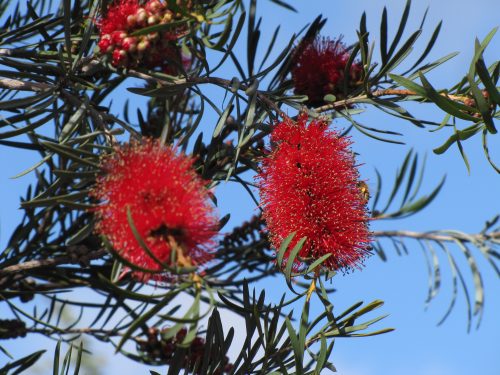
Photo: Trevor Hampel
Rules of writing
No Comments »31st August, 2014; Category: Articles, Master of Arts course, Quotes, The Writer's Life, Writers
Books about writing
Over the years I have read a growing number of books and articles about writing. I still have quite a pile to finish; some I haven’t even started. Funny thing is that the pile never seems to diminish. When I was doing my Master of Arts (creative writing) degree I devoured many quite wonderful books about writing. Here and there I picked up little gems of wisdom from great practitioners of the craft.
The key to success
Over the last decade I have also trolled the internet for that magic bullet, a priceless pearl of wisdom, or the key to open the door to success as a writer. I am still looking. I am slowly coming to realise that I should have looked in the dictionary first. Work – hard work – is the only real key to success.
That is not to play down the importance of reading about the craft of writing in books and on the internet. Much can be learned from these sources. Every now and then I come across a sentence, or a paragraph and even a whole chapter or article which makes an immediate impact. Putting that wisdom into practice is the hard part.
Lists, lists and more lists
One thing I have noticed about internet and blog articles in particular is the love of lists. It seems like hundreds, maybe even thousands, of writers are making lists. 10 ways to be a better writer. 7 sure ways of getting published. 9 methods of securing an agent. The ‘list’ could go on and on.
No; I am not going to write a list. (Confession: I have been known to – see here.)
Instead, I am going to reflect on a list I read a few days ago. The article is called Zadie Smith’s 10 rules of writing. I will comment on just a couple of them.
Avoid cliques, gangs, groups. The presence of a crowd won’t make your writing any better than it is.
I understand what the she is trying to say. Sometimes a group of fellow writers can muddy the water, and they will make suggestions which are not only not helpful, but are downright harmful. An example occurred with one of degree supervisors; she didn’t understand the climate of the country where my novel was set. Generally however, I find that belonging to a writers’ group can be very beneficial. Many of my reasons are included in articles here and here and here and here.
Work on a computer that is disconnected from the internet.
Guilty as charged.
I spend – often it is waste – too much time checking and reading my email, Facebook updates and Twitter feeds. I guess I should regard that wasted time as lost income from writing.
Protect the time and space in which you write. Keep everybody away from it, even the people who are most important to you.
Dealing with this one is far more difficult for me. While my wife encourages me by giving me the time and space to write, most other people regard me as retired. Sure, 10 years ago I retired from classroom teaching. Now I try to be a full time writer. That has been very difficult over the last few years when my wife was caring full time for her mother and left me to deal with the housework. We were also without a pastor at church, so I was spending 10 – 15 hours or more running the church. Both of those situations have now changed, so I am without excuse.
Further reading:
- Join a writers’ group
- Another benefit of joining a writers’ group
- Fun at my writers’ group
- The importance of a writers’ group
The photo below has nothing to do with this article. I just think it’s a lovely flower.
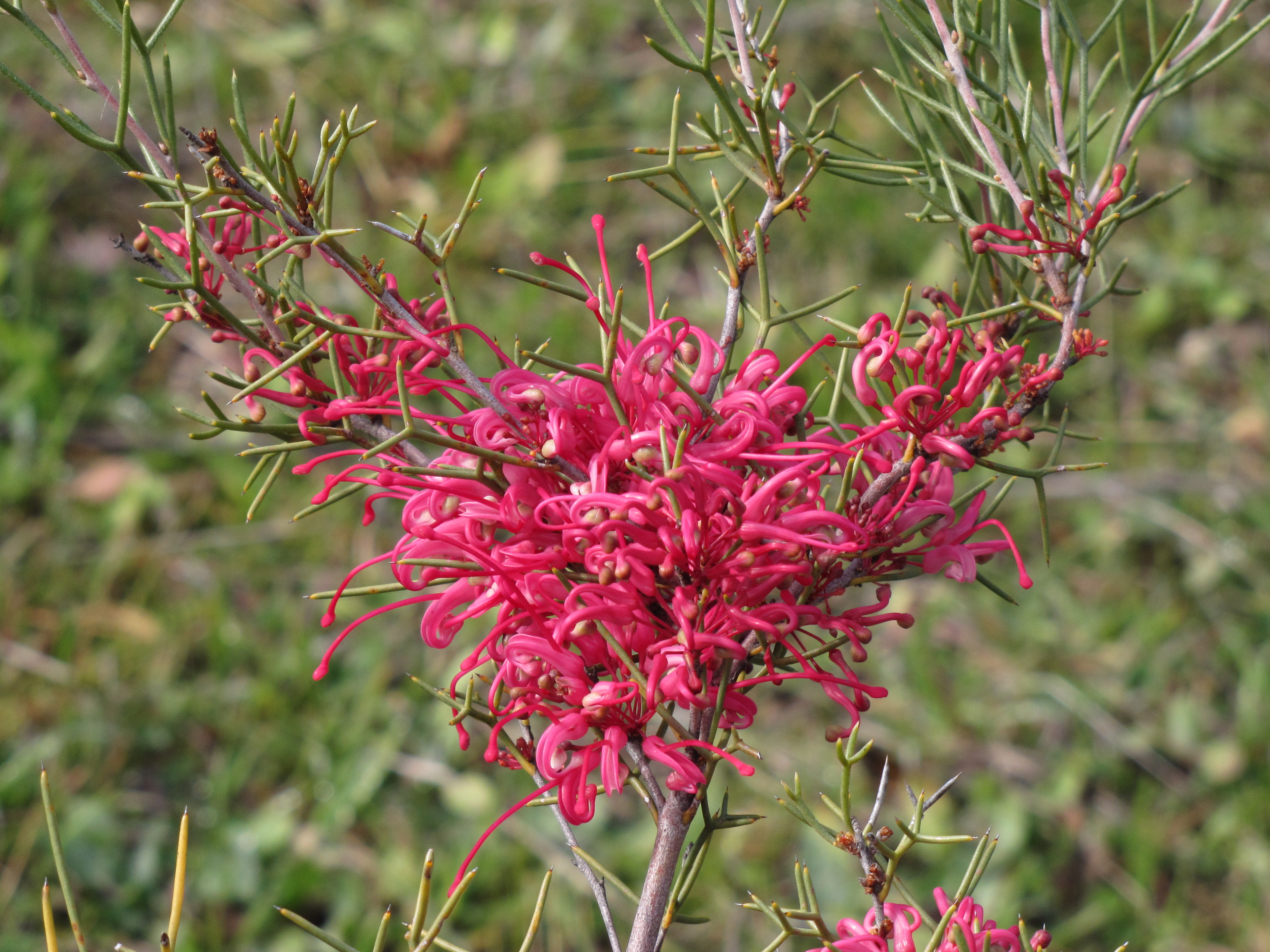
Grevillea flower
Review: Through my eyes: Shahana
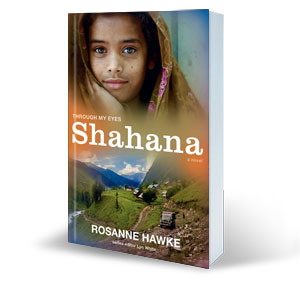
“Shahana” by Rosanne Hawke is the first in a series of novels set in war zones as told through the eyes of a young person. This story is set on the Pakistani-Indian border. The author spent some time in Pakistan as an aid worker, her experiences there bring a realistic authenticity to a well crafted and exciting story. In an historic postscript to the novel, Hawke explains that the conflict over sovereignty of Kashmir is the longest existing war anywhere, having commenced in 1947. As is common to most war zones, it is the children who suffer the most.
The protagonist Shahana is an orphan, living alone with her younger brother within a short walk of the Line of Control patrolled constantly by Pakistani and Indian soldiers. Being orphans, Shahana supports her fractured family by creating exquisite embroidery, her only means of financial survival.
When Shahana rescues unconscious Zahid near the border, she is thrown into a dangerous dilemma. She can’t leave him to die, but to shelter him in their humble home brings her and her brother an even great risk. To alert the authorities would bring Zahid certain imprisonment or even death. To further complicate Shahana’s life, her brother Tanveer is taken captive and into virtual slavery under the “care” of the man to whom she sells her embroidery, a man who would do anything to marry her despite the big difference in their ages.
This is a fast moving, exciting, page-turning novel with many twists in the plot. The author has drawn a range of believable characters caught in a dangerous, life-threatening situation. Life in Pakistan today is shown with all its terrible dangers and stark beauty. Highly recommended.
“Shahana” is published by Allen & Unwin.
Teachers’ notes and an interview with the author can be found here.
My next review in two days time will be of the second in this series, “Naveed” set in Afghanistan.
Disclosure: Rosanne Hawke was my supervising lecturer during the writing of my thesis novel for my Master of Arts Creative Writing degree and remains a close friend and former colleague.